Estados Unidos

Guatemala Moving Forward
New investments could be made up to the third year after the ports law takes effect, according to the CIV
Forming the first Board of Directors, appointing the general manager, and hiring the technical team will be some of the steps needed to launch the new National Port Authority (APN) after President Bernardo Arévalo signed the law into effect.


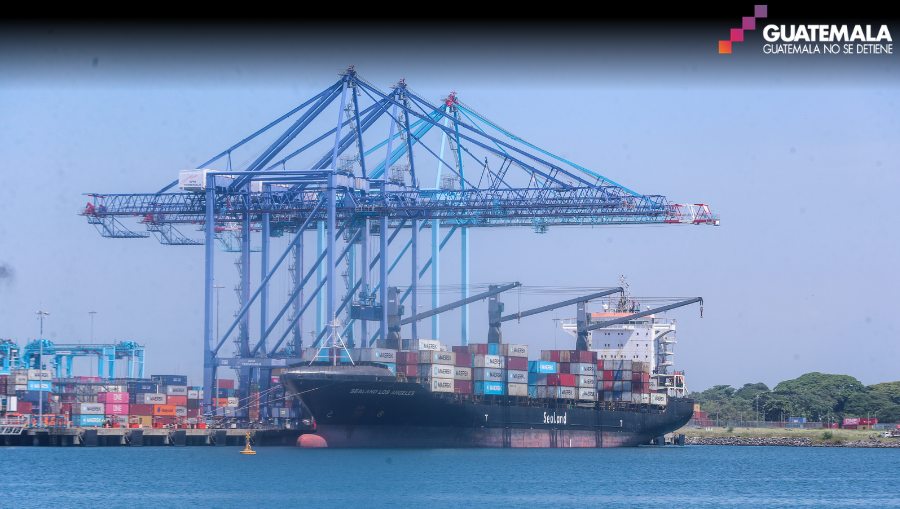 " alt="Miniatura" class="d-block w-100"/>
Now that the General Law on the National Port System has been enacted and published, the next challenge will be to meet the timeline for launching the new National Port Authority (APN). Appointing the first Board of Directors, selecting the general manager, and hiring the technical staff will be just the first steps in a process that, according to the Ministry of Communications, Infrastructure, and Housing (CIV), will take more than a year to fully establish itself.
Decree 20-2026 was published on September 2nd in Diario de Centro América and will take effect 30 days later. Once it takes effect, the deadlines related to the establishment of the new institutional framework and the development of the necessary regulations for its operation will begin to run.
However, the Ministry of Communications, Infrastructure, and Housing (CIV) anticipates that completing the implementation of the new institutional framework will take more time. “A year is not enough for an agency like this,” said Deputy Minister of Transportation Fernando Suriano when asked what should have changed by 2027.
By that time, he explained, there should be a governing body, such as a Board of Directors; a general manager working in coordination with that body; the key management positions already filled; the necessary human resources; and progress in drafting the regulations required by the law itself. However, he cautioned that, by the end of that first year, it would still be premature to expect new port investments to have already been approved. “If we have that in place within a year, it means we’re on the right track.”
The timeline outlined by the CIV extends to 30 months (that is, the third year) for a subsequent phase: ensuring that the country has the regulations and procedures in place that allow a domestic or foreign investor to know what requirements must be met, where to submit an application, what procedure to follow, and which authority will be responsible for authorizing a new port project.
Eligibility Criteria and Disclaimers
For his part, Lisardo Bolaños, technical coordinator of Guatemala Moving Forward, estimates that the law should be published in Diario de Centro América in the coming weeks and take effect around October: “Starting in October, both the executive branch and the National Port System Users’ Council (Cusport) must begin the process of determining who will serve on the port authority’s board of directors,” he said.
The expert explained that between October and November, the rules to be followed by the entities responsible for nominating Board members should begin to take shape, along with the ideal profiles and the identification of potential candidates. He estimates that the first Board of Directors should be appointed between the third and last weeks of February 2027.
The selection process for this Board of Directors is not based solely on filling vacancies; the expert explained that the ideal candidate is someone with expertise in port-related matters, but that is not the only requirement—the position also requires someone with knowledge of public administration, a thorough understanding of the international regulations governing the sector, and an understanding of the mechanisms needed to attract new investment.
In this regard, the technical aspect is also among the CIV’s main concerns. The deputy minister identified as one of the risks associated with the timeline the possibility that the institutions responsible for making appointments might not find the right candidates in time, or that they might end up appointing individuals who lack the strategic, ethical, and technical capabilities necessary to lead the new authority: “Boards of directors are forums for making technical, strategic, and legal decisions based on the institution’s mandate. And each institution has a different mandate.”
Two additional factors could delay the establishment of the APN: the availability of resources and the administrative processes for hiring new staff. Deputy Minister Suriano explained that the Ministry of Public Finance (Minfin) will need to support the launch with resources, while structuring the hiring system will require coordination among the new authority, the National Civil Service Office (Onsec), and the Ministry of Public Finance (Minfin).
Suriano warned that the absence of these resources could result in the institution having its organizational framework formally established but lacking the capacity to hire the managers and staff needed to carry out its functions.
These deadlines begin to run as Guatemalan ports face a demand that already far exceeds the conditions under which they were designed.
Captain Mario Véliz, operations manager at Empresa Portuaria Quetzal (EPQ), explained that Puerto Quetzal was designed to handle between 1.5 million and 2 million metric tons per year; however, the infrastructure is not keeping pace with the current volume of cargo entering the port: “Last year, we handled nearly 16 million metric tons.”
Véliz noted that, when comparing the cumulative volume through July with the same period last year, Puerto Quetzal had handled approximately 1.2 million additional metric tons and served 60 more ships.
“Cargo volume has grown over the years; every year, the volume of cargo that we at Puerto Quetzal have handled has continued to increase.”
Infrastructure remained one of the topics discussed during the interview conducted by the Guatemala Moving Forward team. Captain Véliz noted that the commercial pier is about 800 meters long, divided into four berths of approximately 200 meters each. This capacity limits the number of vessels that can be served simultaneously; especially when ships arrive that require several days to complete their operations.
This difference depends on the type of cargo; while a container ship can complete its operations in approximately 12 to 15 hours, other ships carrying dry bulk or general cargo may remain docked for eight to ten days. During that time, other vessels continue to arrive and must wait in the anchorage area.
The captain also mentioned that one of the main bottlenecks—congestion—does not depend solely on the port’s physical space. Rain can halt the unloading of moisture-sensitive materials; a lack of ground transportation can slow the pace at which goods are shipped out; and some consignees may lack sufficient warehouse space to immediately receive the cargo.
Thus, under these conditions, a ship that has already been assigned a berth may remain at anchor because the owner of the cargo is not prepared to receive it.
From his perspective, the need remains a physical one: to expand the port’s capacity: “The port has already become too small for all the cargo that’s coming in (…) I think that perhaps this will really help streamline the port’s infrastructure.”
The APN’s Operational Plan
For Congressman Jorge Ayala, chairman of the Congressional Committee on Economy and Foreign Trade, port problems are not limited to a lack of space for ships to dock but extend to various stages of the logistics chain. Among these issues, he cited port depth, the need for dredging, unloading capacity, yards for temporary storage of goods, inspection processes, and the connection of port facilities to highways and other modes of transportation. Ayala agrees that trade growth has not been accompanied by the necessary investments.
According to the congressman, one of the problems the new law aims to address is precisely the fact that, for decades, the ports operated without an institution capable of providing leadership, oversight, and planning.
“We have bottlenecks in various areas, ranging from anchorage and the docks to unloading capacity, ship draft, the coordination of inspections, the yards where the cargo is stored after unloading, and our ability to integrate our ports with roads and railways through multimodal transportation.”
For Ayala, part of the problem lies in the fact that the ports were designed to handle ships of different sizes than those of today. The increase in the size and capacity of ships has, in practice, reduced the number of berths that can be used simultaneously, while the investments needed to adapt the infrastructure have lagged behind. “We’re growing at a double-digit rate 13 or 14% in both our import and export volumes, but our investments in the ports have lagged behind for more than 40 years.”
He also warned that physical improvements will not be enough if institutional procedures continue to operate in a disjointed manner. He explained that a single shipment may be subject to inspections by various agencies, including the Ministry of Agriculture, Livestock, and Food (MAGA), the Ministry of Public Health and Social Assistance (MSPAS), the Ministry of the Interior (Mingob), the Ministry of National Defense (Mindef), and the authorities themselves. “It’s not that we’re talking about conducting fewer inspections, but rather about conducting them more effectively,” he stated.
This coordination among institutions will be one of the tasks the new National Port Authority will need to address. Ayala believes that the fundamental change in the law consists precisely in moving from port companies that operate under their own structures to a system with an entity capable of providing long-term leadership, planning, oversight, and supervision. “The systems-based approach did not exist,” he summarized.
The cost of maintaining these bottlenecks is not limited to those who directly use the ports. Ayala explained that ship delays can be factored into the cost of raw materials and subsequently passed on to the products purchased by consumers.
As an example, he cited a ship carrying animal feed. If it remains waiting for several weeks to enter the port, the additional cost ends up being factored into the feed used to produce beef or chicken and, subsequently, into the price paid by the consumer.
For Lisardo Bolaños, the delays in establishing the APN are not merely a matter of missing an administrative deadline. Every stage that is postponed could push back subsequent investments and decisions. “Every year that passes is a year of delay in the investment processes for new port terminals,” he said.
He explained that one of the functions of the new institutional framework will be to provide guidance on the system’s future development. This is important, Bolaños noted, because international companies can take between three and five years to decide whether to invest in a particular country.
“The cost of having that ship sitting there increases the cost of the feed that will serve as the concentrate used to feed the animals, for example, which will eventually reach the consumer’s table at an incremental cost due to the inefficiencies we’re experiencing throughout the value chain.” Jorge Ayala, chair of the Congressional Committee on the Economy
A company considering setting up a production operation needs to know not only what infrastructure is available at the moment, but also what capacity the country will have in the coming years.
For this reason, he considers it important for the APN to develop a plan that outlines which terminals, expansions, or other investments are planned and under what rules they may be carried out.
The delay would also have implications for port security. Bolaños noted that one of the areas requiring strengthening will be the response to activities such as smuggling and the trafficking of drugs or weapons, along with compliance with international standards.
The appointment of the first Board of Directors will not mark the end of the implementation phase for the new National Port Authority. On the contrary, it will usher in a second phase in which the executive leadership, technical structure, regulations, and the transition of functions from the existing institutional framework must be defined.
Mario Yon, an advisor to Guatemala Moving Forward, explained that much of the subsequent process will focus precisely on establishing a new institution. “The entire coming year will be devoted to establishing this new institution.”
According to Yon, once the Board of Directors is formed, the next steps will be to appoint the general manager, establish the specific management units, and draft the regulations required by law. At the same time, an institutional transition must take place, since the National Port Commission (CPN) currently performs functions that will subsequently be transferred to the APN.
“There is already a CPN, which is currently responsible for overseeing the ports; the new authority, called the National Port Authority (APN), will gradually assume some of those responsibilities, and that, obviously, goes hand in hand with how the new authority’s leadership is being established.”
This transfer of functions will take place as the new institution builds its own capacity. For Yon, the process is not limited to appointing officials and opening offices; it will also require specialized personnel, manuals, procedures, and technical support.
“It will require trained people who can implement it—people who know about ports, who are qualified and well-paid,” he said.
For Claudia del Águila, Competitiveness Manager at Agexport, the process must follow a similar logic. The passage of the law is only the first step; what matters most is its implementation and proper execution.
Del Águila explained that the “Guatemala Doesn’t Stop” Infrastructure Roundtable identified 48 actions with established deadlines related to the implementation of the new regulations.
The union representative noted that the new law will help streamline the National Port System and establish long-term investment planning, in addition to opening up greater opportunities for public and private participation. However, she cautioned that the broader effects of the reform will be seen primarily in the medium and long term.
As this process moves forward, the ports will need to continue addressing immediate problems. “We cannot ignore the fact that we currently have ports that need to improve their efficiency,” Del Águila summarized.
Among the urgent issues, he mentioned dredging, the availability of cranes, the establishment of berthing windows, and better coordination among the agencies involved in the entry and exit of goods.
“The results of the reform will not be immediate, and the most complex challenge begins precisely after legislative approval. Implementing a reform has two parts: obviously, the first is to draft and approve it, but the most complicated part is implementing it.” Mario Yon, analyst at Guatemala Moving Forward.
He also mentioned that coordination among institutions will be one of the areas where the APN must demonstrate whether the new institutional framework produces concrete changes.
The drafting of regulations will be another crucial step. Jorge Ayala explained that the challenge of the new legislation will be to “move beyond a good law” toward concrete results. To achieve this, it will be necessary to develop regulations and strengthen technical capabilities. “We are transitioning from a National Port Commission to a National Port Authority that already had certain functions but did not have the role of coordinating the commercial operation of port catchment areas.”
This institutional change will also have an impact on other government agencies. Lisardo Bolaños explained that there are responsibilities involving the Ministry of Agriculture, Livestock, and Food (MAGA), the National Council for Protected Areas (CONAP), the Ministry of Environment and Natural Resources (MARN), and other institutions that will need to adjust their procedures or regulations to comply with the provisions introduced by the new law.
On this point, Herlindo Herrera, general manager of Proquirsa, agrees that some of the delays occur after the goods arrive at the port, when they must pass through inspections by various agencies.
Among the bottlenecks, he mentioned X-ray equipment, permits related to controlled products, inspections by entities such as the Ministry of Agriculture, Livestock, and Food (MAGA) or the Ministry of Public Health and Social Assistance (MSPAS), and certain procedures that still require payments or in-person visits. “A container can sit there for up to five or six days,” he said, referring to goods subject to certain controls.
Herrera also pointed out that some inspections are conducted separately, which requires moving the cargo between different locations. “At Puerto Quetzal, you go to one ramp for the SGAIA inspection and then have to go to another ramp for the SAT inspection; they don’t conduct the inspections together,” he explained.
For Ayala, this type of coordination will be essential if the goal is to reduce logistics times, as it involves moving toward greater digitization and, eventually, toward one-stop shops that allow for the integration of procedures among the various stakeholders. He also emphasized that a single institution that lacks coordination can bring the entire process to a halt or compromise the transparency of information.
“In a chain, it is always the weakest link that breaks, or the weakest link that causes the longest delays.” Jorge Ayala, Chair of the Congressional Committee on Economy and Foreign Trade.
Nor will the new Port Authority directly assume all the responsibilities that currently fall to the port companies.
Yon explained that the APN will be responsible for establishing general rules, requesting information, promoting efficiency indicators, and contributing to system planning, but the day-to-day responsibility for operating and improving each port will continue to fall to the respective port authorities.
“There will be a part where the new regulatory authority, once it is implemented, will be demanding efficiency results, but the other part is providing the ports with tools [...] yet that remains the responsibility of the port boards and the authorities in place,” he said.
The CIV maintains the same position. Deputy Minister Suriano explained that the new law’s entry into force will not halt operations but will instead strengthen them, both at EPQ and Empornac, and that both companies should continue to carry out their own projects while the new institutional framework is consolidated.
Retired Navy captain and current port manager at Arrendadora Continental, Marcos Sis Cotoyac Pérez, believes that this expansion should not be delayed, since infrastructure growth has not kept pace with the development of maritime trade.
“They should be developing their reception and berthing systems at their docks in parallel with this development; however, I believe that hasn’t happened,” he said.
Sis Cotoyac added that vessels have also evolved and now require greater reception capacities. “We must keep pace with maritime development: much larger ships, greater reception capacity in terms of depth,” he explained.
Drawing on his experience in maritime operations, he noted that a lack of space can force ships to remain at anchor until a berth becomes available.
Find more from “Guatemala Moving Forward” on our Prensa Libre and Guatevisión video channels, a collaborative content initiative focused on solutions journalism.
WRITTEN BY