

 Estados Unidos

Guatemala Moving Forward
Villa Nueva, the major logistics hub that urgently needs more incentives to attract investment
The auto parts, agricultural products, plastics, and textiles industries could find opportunities in Guatemala in 2026. However, analysts and business leaders are calling for specific public policies for clusters, new incentives, skilled labor, and infrastructure.

|


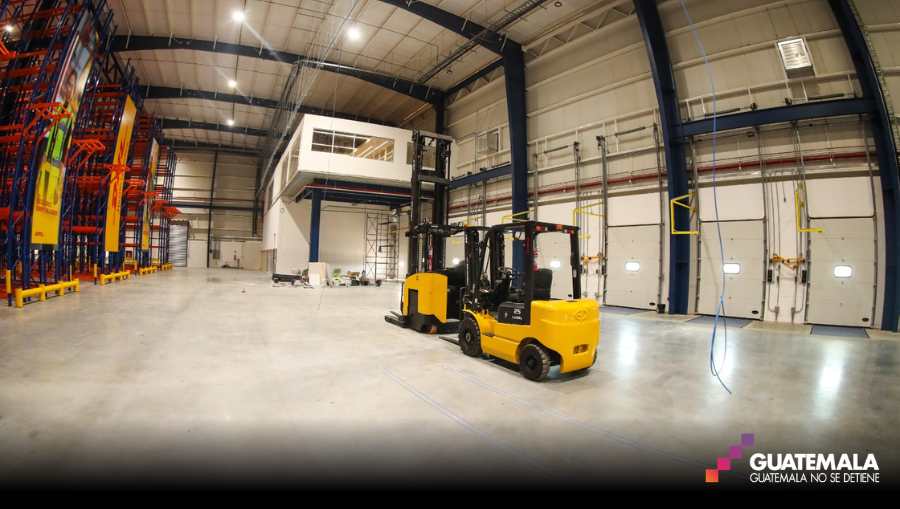
DHL's new operations center in Villa Nueva opened in November 2025. It covers 8,500 square meters and is dedicated to health sciences. (Photo: Prensa Libre: Juan Diego González)
Located about 15 kilometers from Guatemala City, the municipality of Villa Nueva has positioned itself in recent years as a strategic territory for attracting foreign investment. Its proximity to the capital, as well as its connection to the country's main ports and roadways, make it a key location for the establishment of industries, especially in the logistics sector, as it serves as a transit point for the movement of goods.
According to Juan Esteban Sánchez, executive director of Invest Guatemala, Villa Nueva offers a special advantage because it is located outside the central area of the capital. “We always talk about Guatemala City, but Villa Nueva is now beginning to attract a lot of attention from investors,” he explained.
One example of this interest is the investment made by DHL Global Forwarding, which announced in November 2025 a new logistics center in this municipality. The project covers 8,500 square meters, with 11,500 pallet positions and 14 loading and unloading ramps, enabling large-scale import and distribution operations.
José Luis Monje, general manager of DHL in Guatemala, explained to Prensa Libre that location was a determining factor. “Villa Nueva is very helpful because of its location, as it allows goods coming from the country's two main ports to reach their destinations more easily,” he said.
The center is primarily focused on the pharmaceutical industry, a sector that the company seeks to strengthen in Guatemala. “We want the country to be a major player in this sector. Our organization supports this investment, which amounts to US$10 million, as a commitment to Guatemala and to continue growing in this niche,” said Monje.
Sánchez assures that these investments are a call to companies linked to the pharmaceutical sector. “Through these large investments, alternatives for reducing logistics costs are generated so that investors who come to the country can easily distribute their products in the Guatemalan market or border markets,” he explained.
Likewise, for Sánchez, these types of investments send signals of confidence to the market. "Guatemala receives between 75 and 80% of its foreign direct investment in the form of reinvestment. This indicates that those who are already in the country believe in its potential and want to continue growing. If DHL is growing, it is the first sign that international investors want to believe more in the country. In addition, this investment will facilitate additional investments," added Sánchez.
Industrial policies by sector
From Invest Guatemala's perspective, there are specific sectors in which the country should focus its efforts to attract investment. Sánchez pointed out that one of the main ones is parts and components for vehicles, motorcycles, light machinery, and household appliances.
Another sector identified is agriculture and agro-industry, where Guatemala already has a solid productive base and room to continue growing without affecting established companies, both local and international.
A third sector is plastics and plastics processing. “We have found interest from US companies in sourcing plastic parts for their processes, such as toy manufacturing,” explained Sánchez. Added to these is the clothing and textile sector, where there is an organized business base and opportunities for growth in the supply chain, both for the local market and for export.
Jorge Benavides, a researcher associated with Fundesa, believes that certain conditions favor some clusters more than others. “For example, if you are looking for a location for technology where there are more internet users and a higher rate of electrification, these are the conditions that are conducive to its installation,” he added.
For an agricultural cluster, issues such as security, land use planning, and access to water will be important. “We know that there are companies that, before deciding where to start or expand operations, focus on these indicators to see if they have the foundations to grow,” emphasized Benavides.
However, Guatemala does not yet have all the necessary conditions in place to consolidate fully developed clusters. “If one were to assess whether Guatemala has clusters, in pure theory, conditions are lacking from a regulatory, operational, and facilities standpoint through research centers for certain sectors,” said Sánchez.
However, he pointed out that there is already a clear example. “We can say that we are already identifying that Guatemala has a cluster, which is the textile cluster,” he explained.
He added that the creation and growth of industrial parks in the coming years will put pressure on the market to move toward industrial policies, specific incentives, and human capital formation associated with particular sectors.
Sánchez believes that the country can begin to make progress in other clusters. “Guatemala can currently make progress in the agri-food cluster, focusing on fruit processing or sugar and confectionery manufacturing,” he said.
Regarding pending actions, he indicated that there is an obligation to facilitate foreign direct investment. “From now on, we have to promote facilities for foreign direct investors that reduce the bottlenecks that we have already fully identified,” he said.
Territorial incentives and advantages
One of the main attractions Guatemala offers investors, according to Sánchez, is its geographical location, due to its proximity to markets such as Mexico, El Salvador, and the United States. Added to this is a competitive workforce, both in terms of costs and job stability.
He also emphasizes that, in terms of supply, the country offers international investors a solid regulatory framework, despite the challenges it still faces. “Guatemala has a very high-level business class that is currently focused on preparing and building industrial parks or specialized square footage for international investment,” he explained.
For Sigfrido Lee, a researcher associated with Cien, Guatemala has political characteristics that make it a strong logistics hub. “It has an open-border economic policy, with more than 90% of its trade covered by free trade agreements, which is very investment-friendly,” he said. He also highlights the stable macroeconomic policy, which has kept inflation and exchange rates stable.
However, municipalities outside the capital city are beginning to gain relevance. According to Leé, many decisions have been decentralized and strategic investments have been opened up to other regions of the country where potential has been found.
According to the Local Competitiveness Index (ICL) 2025, prepared by Fundesa, Villa Nueva has a population of 501,127 inhabitants and is the fifth most competitive municipality of the 340 that make up the country, obtaining a score of 72.21, which reflects significant advances in productivity and conditions for investment. In addition, this territory's GDP per capita for 2024 was $12,221.07, and by 2018, it had an urbanization rate of 98.4%.
For Benavides, Villa Nueva cannot be analyzed in isolation. “It is part of the Mancomunidad Gran Ciudad del Sur, [autonomous entity and voluntary association of six municipalities in the metropolitan area south of the department of Guatemala] so it is not alone. All goods transportation must necessarily pass through this Municipium,” he explained.
Sánchez agrees that Villa Nueva has important characteristics that make it stand out from other destinations, such as the available workforce, because people generally work in the capital and have to travel long distances to get to their workplace. “Villa Nueva can now offer opportunities for people to work in their place of origin,” he emphasized.
Bottlenecks to overcome
Despite the advantages and territorial attractions that Guatemala offers investors, there are still challenges that the country must overcome in order for more logistics industries to choose to set up operations there. “Let's look at it in terms of bottlenecks that need to be overcome, both for the public and private sectors,” said Sánchez.
The first challenge is to have a skilled workforce for specific sectors. “We need to move towards a process in which universities and training schools prepare people who are capable of entering a productive sector such as pharmaceuticals,” said Sánchez.
The second challenge is to strengthen research and development. Finally, Sánchez considered that infrastructure and industrial policy in strategic sectors should also be considered, linked to an incentive policy that does not affect the country fiscally, but which motivates both local and international entrepreneurs to invest more in the country.
Leé also agrees that investing in infrastructure would not only attract private investment, but also create jobs. “There are many urgent employment opportunities within the interior of the country, and this can be achieved precisely through the creation of these logistics corridors,” he added. In addition, he asserts that investments must also be made in electricity, drinking water, sewerage, and sanitation in order to achieve development and decentralize that growth.
Find more of Guatemala Moving Forward on our Prensa Libre and Guatevisión video channels, content produced in partnership and focused on solutions journalism.
WRITTEN BY